Sunday, July 28, 2019

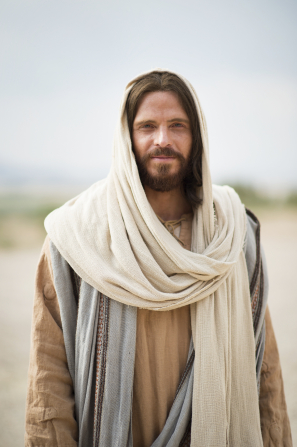
Names of Christ: Good Shepherd

Well, it's been quite a while since I've made a Names of Christ post. If you'd like, please go back a few posts to find the introduction to this series, which explains more about it and contains links to several resources that I used in my research.

Today, I started to worry about the future. My husband and I are faithful members of The Church of Jesus Christ of Latter-day Saints, and we have testimonies of the truthfulness of the doctrines contained therein. But I started to worry about the "What ifs" of the future. What if someday, my testimony weakens? What if I completely lose it? What if I start going through the motions just to avoid hurting other people? What if Joseph does?

You get the picture. So I got down on my knees and told Heavenly Father what I was thinking. And then I thought about this Names of Christ series. I decided to take that as my answer to comfort me in this moment! I'm hoping that as I research a name of Christ, who is the ultimate comforter, I'll be able to feel reassured and at peace.

Today, I've decided to learn more about the reference "good shepherd." To the best of my knowledge, there are several verbatim scriptural references to the "good shepherd":

New Testament

Book of Mormon

Pearl of Great Price

(Please note that this list does not include references to the "shepherd," but the "good shepherd.")

In case you just breezed past the list and ignored the hyperlinks, here is one of those nine verses that stuck out to me:

"Wherefore, I am in your midst, and I am the good shepherd, and the stone of Israel. He that buildeth upon this rock shall never fall" (D&C 50:44).

Soo, I'm like 15 minutes into this search, and right there is an answer to my worries. If I build my faith, my testimony, my actions, my LIFE upon the good shepherd, I will not falter. That's something that I need to remember when I'm overthinking the future and underestimating myself. If I center my life on Christ, I will not fall.

Now, back to the analysis...

What does good mean?

According to the LDS Resource edition of Word Cruncher, the original Greek word καλός (kalós) means "properly beautiful, but chiefly (figuratively) good (literally or morally), i.e., valuable or virtuous (for appearance or use, and thus distinguished from ἀγαθός, which is properly intrinsic)."

Let's break that down.

καλός (which has been, in this case*, translated into English good) seems to have a few core meanings:

(1) beautiful
(2) chiefly (figuratively speaking)
(3) good (literally or morally speaking)
(4) valuable
(5) virtuous

*Bonus fun fact: The same word is translated in other places in the King James Bible as better, fair, good, goodly, honest, meet, well, and worthy.

What I take from this first part of the phrase is that Christ, the good shepherd, is much more than what we traditionally think of as good. Exercise is good, right? Vegetables are good. Reading uplifting books is good. But Christ? Christ is the ULTIMATE good.

Check out that second word in the list: chiefly. I really like this one because when we apply it to the reference good shepherd, it seems to imply that there well may be other shepherds, but Christ is the chief shepherd; He is the shepherd of all shepherds. Many sects refer to their congregational leader as a pastor, which shares similar origins to the word shepherd. According to the OED, "The use of the word for ‘shepherd’ for a leader in the Christian church derives from the use of shepherding imagery in the bible." Also, think about the similarities between the words pastor and pasture. In the Church of Jesus Christ of Latter-day Saints, there are prophets, apostles, bishops, and many other leaders whom I think of as shepherds of a sort. Still, however, Christ is the chief shepherd.

Speaking of all that, what does shepherd mean?

Well, the original Greek word is ποιμήν (poimḗn). I used the Oxford English Dictionary to find out a little more about the word shepherd. The first definition is "A man who guards, tends, and herds a flock of sheep (grazing at large); usually one so employed for hire; or one of a pastoral people who herds (his own) sheep, goats, etc."

In reference to Christ, I would say that the last sentence is the most telling. Christ, after all, does not just watch over and protect us simply as an employee. We can choose to be the Lord's own sheep, and when we do, we are in His care. He does it because He loves us. He does it because we are His!

If I were to sum up what I've learned from this research, I would say, "Jesus Christ is the good shepherd; He is our principle caretaker because He loves us."

I hope you were able to gain something from this post. If nothing else, please know that Jesus Christ is your Savior, and He loves you. Because of Him, you can receive remission of our sins and return to live with our Heavenly Father after this life. I am grateful for His watchful eye.

Tuesday, December 25, 2018

Names of Christ: Jesus

Today is Christmas, and I thought it was a perfect occasion to research the name most know best--Jesus.

Our Savior is called Jesus many times in the scriptures, but here are a few examples:
"And, behold, thou shalt conceive in thy womb, and bring forth a son, and shalt call his name JESUS" (Luke 1:31). 
"Behold, I am he who was prepared from the foundation of the world to redeem my people. Behold, I am Jesus Christ" (Ether 3:14). 
"According to the words of the prophets, and also the word of the angel of God, his name shall be Jesus Christ, the Son of God" (2 Nephi 25:19).
I found a pretty cool article that talks about the name Jesus Christ. But I really like using the LDS Resource version of WordCruncher so I can get deep into the research on my own. So here's what I learned from my own study:

The English version Jesus is translated from the Greek form of the name, Ἰησοῦς (Iēsoús). The Greek translation comes from the Hebrew form, יְהוֹשׁוּעַ (yėhôshûa‘). Interestingly, this word comes from two different places: יהוה‎  (yhvh) and ישׁע‎  (ysh‘).

The first part, יהוה‎  (yhvh), means "(the) self-Existent or Eternal; Jehovah, Jewish national name of God." According to WordCruncher:
"Traditional scholars say it means: the one who is; the existing, ever-living. Many recent scholars say it means: the one bringing into being, lifegiver; giver of existence, creator (e.g., he who creates)."
I think that's awesome. In addition to creating our world and everything we know, Jesus created universes beyond our knowledge.

The other part of יְהוֹשׁוּעַ (yėhôshûa‘) comes from ישׁע‎  (ysh‘), which carries the meaning of "properly to be open, wide or free, i.e. (by implication) to be safe; causatively to free or succor." I love this! Drawing from the first half of that definition, Jesus keeps us safe. He gives us a sense of safety and security that we can find nowhere else. His Spirit can provide us with a feeling of safety even in the darkest and most dangerous times of our lives.

Pulling from the second half of that definition, Christ is able to succor (aid or assist) us when we are hopeless and helpless--or even when we're not! Furthermore, He is the reason we are free.
"And under this head ye are made free, and there is no other head whereby ye can be made free. There is no other name given whereby salvation cometh" (Mosiah 5:8, italics added). 
"Wherefore, hear my voice and follow me, and you shall be a free people (D&C 38:22, italics added).
"And ye shall know the truth, and the truth shall make you free" (John 8:32, italics added).
Can I just share an awesome connection that I made when I read John 8:32 this time around? We've all heard the phrase "the truth shall make you free" a thousand times. We've heard it in church, at home, and on TV shows about crime and justice (am I right?). But what might the truth mean in this context?


Consider this verse, which comes a few chapters later: "Jesus saith unto him, I am the way, the truth, and the life: no man cometh unto the Father, but by me" (John 14:6).

Mind. Blown.

I think that one valid interpretation of John 8:32 is that the truth we read about in this verse is in fact Jesus Christ, who Himself declares that He is the truth! This is further supported by the etymology I outlined earlier, which informs us that the name Jesus comes in part from a Hebrew word that means "causatively to free."

This can be summed up in part by this pseudo-equation (my math-loving husband would be so proud of me):

ישׁע‎  (ysh‘) = to free

יהוה‎  (yhvh) + ישׁע‎  (ysh‘) = Hebrew יְהוֹשׁוּעַ (yėhôshûa‘)
= Greek Ἰησοῦς (Iēsoús)
= English Jesus
= "I am... the truth"

Therefore, "The truth [Jesus] shall make you free."

Maybe it was totally unnecessary to go through all of that in the form of an equation, but I had fun doing it, and I think it provides a nice little summary of what I've discussed in this article.

Well, I'll probably end my post here. I've really enjoyed being able to research names of Christ during this Christmas season. I think I'll actually keep this going and try to research a name of Christ every week until... who knows when. I've learned a lot from doing it, and I hope you've learned something, too.

Before I sign off, I want to share a brief testimony of our Savior. Jesus Christ is our Lord, our Maker, and our King. Because of Him, we have hope. We can be with our families forever, and we can receive "all that [the] Father hath" (D&C 84:38). I am thankful for the Christ Child that was born so many years ago on the rough plains of Bethlehem. The King of Kings, the Lord of Lords, the Savior of the world, the Prince of Peace, was born in the humblest circumstances. He lived and died for us. I am eternally indebted to Him, and I am eternally grateful to Him.


Image result for jesus lds

Monday, December 17, 2018

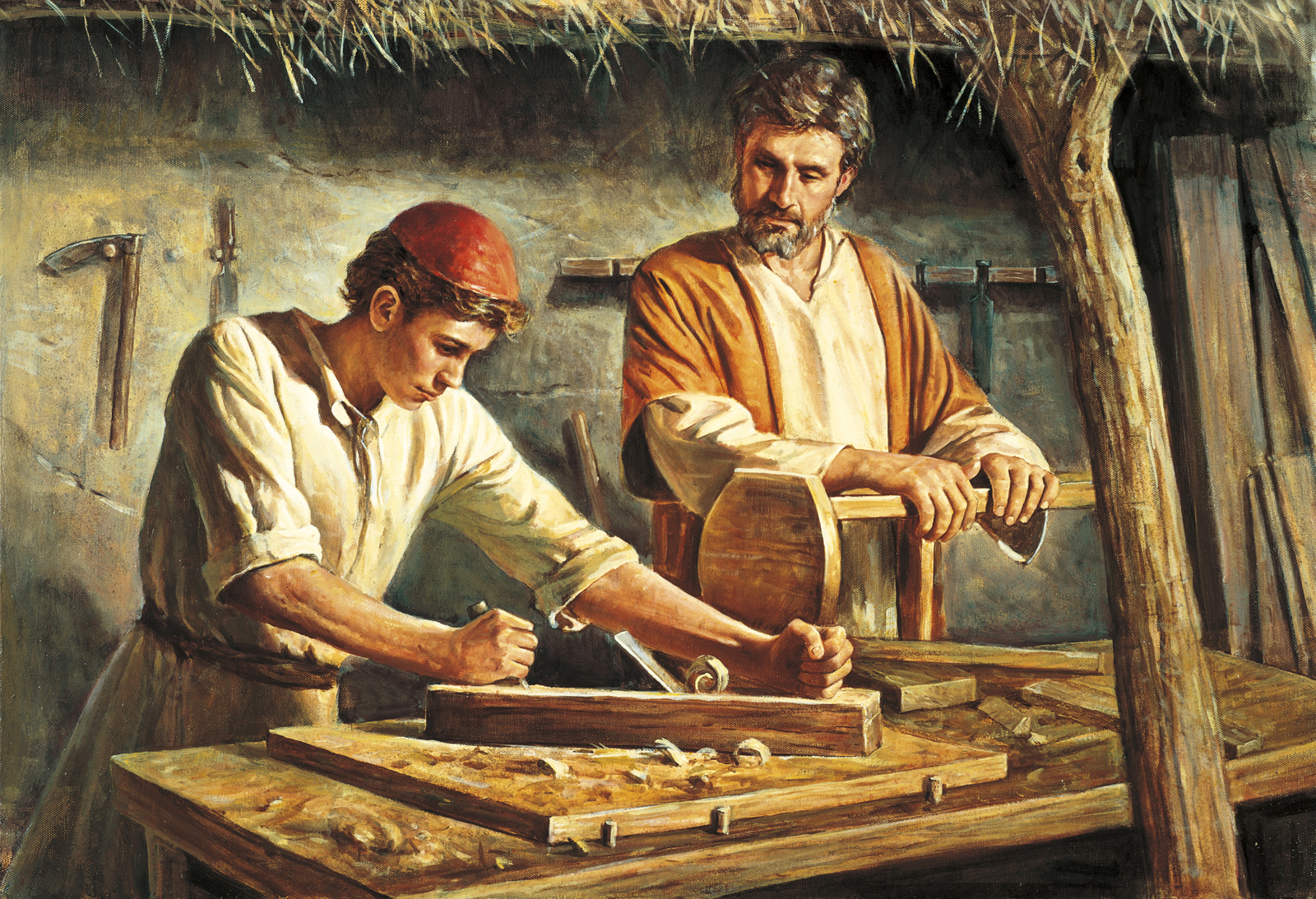
Names of Christ: The Carpenter and Carpenter's Son

Today, I'm focusing on two references to Christ: the carpenter (Mark 6:3) and the carpenter's son (Matthew 13:55).

I consulted several dictionaries, including the Greek-English Parallel Bible that I love so much, and they all said essentially the same thing: A carpenter is someone who builds and mends things made of wood.

That was no surprise. I mean, I've known what a carpenter is for a long time. But a couple of the entries/translations used another word that adds an extra layer of meaning to this occupation: artificer. An artificer is "a skilled craftsman or inventor" (Google), "a skilled craftsman" (Cambridge Dictionary), or "a person who is skillful or clever in devising ways of making things; inventor" (dictionary.com).

The Oxford English Dictionary offers another, more specific definition for artificer: "God or a god, considered as the creator of the universe."

With that background, we can talk about the symbolism that I think is behind this reference to the Lord.

(1) On a practical and not-really-all-that-symbolic note, I really believe that Jesus chose to labor with His own hands to make a living. He has commanded us to work and be productive (e.g., Doctrine and Covenants 42:42, 1 Thessalonians 4:11-12), and He serves as our example in all things (John 13:15). Even though He is the Son of God and probably could have chosen to sit down and let others serve Him all day, He values hard work. He earned His livelihood.

(2) A carpenter builds. This brings us back to that special word artificer. I think it's significant that this word has been used to refer to the Lord, the Creator of the universe. Christ's occupation of building things on Earth seems to be a temporal representation of His grander spiritual calling of Maker.

(3) A carpenter repairs. What more fitting occupation for the One who repairs like no one else can? I mean, I have no doubt Jesus was skilled with woodwork. But think of how skilled He is when it comes to us, his brothers and sisters! He can take broken hearts, broken minds, and broken spirits and mend them until they are broken no more. He can wash away our sins and infirmities so that "though [our] sins be as scarlet, they shall be as white as snow; though they be red like crimson, they shall be as wool" (Isaiah 1:18).

Elder Jeffrey R. Holland gave a talk entitled "Broken Things to Mend." (If you have time, I cannot recommend this talk enough. He speaks frankly and lovingly about the mental and emotional challenges of this life and, more important, how we can overcome them.) In his address, he quotes a poem (click here to hear this excerpt from his talk):

In Nazareth, the narrow road,
That tires the feet and steals the breath,
Passes the place where once abode
The Carpenter of Nazareth.

And up and down the dusty way
The village folk would often wend;
And on the bench, beside Him, lay
Their broken things for Him to mend.

The maiden with the doll she broke,
The woman with the broken chair,
The man with broken plough, or yoke,
Said, “Can you mend it, Carpenter?”

And each received the thing he sought,
In yoke, or plough, or chair, or doll;
The broken thing which each had brought
Returned again a perfect whole.

So, up the hill the long years through,
With heavy step and wistful eye,
The burdened souls their way pursue,
Uttering each the plaintive cry:

“O Carpenter of Nazareth,
This heart, that’s broken past repair,
This life, that’s shattered nigh to death,
Oh, can You mend them, Carpenter?”

And by His kind and ready hand,
His own sweet life is woven through
Our broken lives, until they stand
A New Creation—“all things new.”

“The shattered [substance] of [the] heart,
Desire, ambition, hope, and faith,
Mould Thou into the perfect part,
O, Carpenter of Nazareth!”

I love this poem. It is so beautiful. Truly, the Carpenter can mend our broken hearts and lives.

(4) Finally, I think it is so significant that Christ is referred to as the carpenter's son (Matthew 13:55). Maybe it was common for sons to take up the trade of their fathers in those days--in fact, it probably was. But I think this reference speaks beyond traditions of the day. I believe that Christ taking up Joseph's trade symbolizes our Savior taking up His Heavenly Father's trade. Consider this scripture found in John 5:

17 But Jesus answered them, My Father worketh hitherto, and I work.
19 Then answered Jesus and said unto them, Verily, verily, I say unto you, The Son can do nothing of himself, but what he seeth the Father do: for what things soever he doeth, these also doeth the Son likewise. (emphasis added)

The Savior then goes on to list a few examples of things that He has seen the Father do and, therefore, has done Himself. Christ followed the example of His father on Earth, just as He follows the example of His Father in Heaven.

I have a testimony of Jesus Christ, the Carpenter and Carpenter's Son. He works, builds, repairs, and does the work of the Father faithfully. I am grateful I have the opportunity to know Him better through the scriptures, until I can meet Him at that great day.

                               Image result for carpenter jesus lds

Sunday, December 9, 2018

Names of Christ: The Great I Am

Last week, I researched the name Prince of Peace. Today, I'm researching the name I Am in the scriptures. This is a name that has confused me because I'm an English language enthusiast, so it always confused me that (1) the Lord would refer to Himself with a verb and (2) the verb doesn't even conjugate according to tense like all verbs do!

Like Prince of Peace, this name is found in just a few verses in the scriptures:
1 Listen to the voice of Jesus Christ, your Redeemer, the Great I Am, whose arm of mercy hath atoned for your sins... (Doctrine & Covenants 29:1, emphasis added)
56 Your father Abraham rejoiced to see my day: and he saw it, and was glad.
57 Then said the Jews unto him, Thou art not yet fifty years old, and hast thou seen Abraham?
58 Jesus said unto them, Verily, verily, I say unto you, Before Abraham was, I am.
59 Then took they up stones to cast at him: but Jesus hid himself, and went out of the temple, going through the midst of them, and so passed by. (John 8:56-59, emphasis added)
14 And God* said unto Moses, I AM THAT I AM: and he said, Thus shalt thou say unto the children of Israel, I AM hath sent me unto you.
15 And God said moreover unto Moses, Thus shalt thou say unto the children of Israel, The Lord God of your fathers, the God of Abraham, the God of Isaac, and the God of Jacob, hath sent me unto you: this is my name for ever, and this is my memorial unto all generations. (Exodus 3:14-15, emphasis added)
*To clarify, I am a member of The Church of Jesus Christ of Latter-day Saints. We believe that the Old Testament God or Jehovah is Jesus Christ, the Son of God. We believe that Jesus Christ is the literal Son of God and, therefore, a separate and distinct individual from God our Heavenly Father. However, they are completely united in purpose and mission, so they are often referred to by the same name in the scriptures (e.g., God, the Lord, the God of Abraham, etc.). For more info, please ask me or visit this link.

Now, that last scripture (Exodus 3:14-15) was quite revealing to me. To address my second point of confusion that I mentioned earlier, the Lord doesn't conjugate I Am because there's no need to; the verb tense is eternal and therefore constantly present. Christ isn't "the Great I Was" or "the Great I Will Be" or "the Great I Would Be." From eternities past through eternities future, He is! We are frequently reminded in the scriptures that the Lord does not change:
9 For do we not read that God is the same yesterday, today, and forever, and in him there is no variableness neither shadow of changing?
19 And if there were miracles wrought then, why has God ceased to be a God of miracles and yet be an unchangeable Being? And behold, I say unto you he changeth not; if so he would cease to be God; and he ceaseth not to be God, and is a God of miracles. (Mormon 9:9, 19; see also 3 Nephi 24:6, Doctrine & Covenants 76:4)
 As I mentioned, God and Christ are fully united. If God does not change, I would suggest that Christ also does not change. They are both "the same yesterday, today, and forever, and in [Them] there is no variableness neither shadow of changing."

Now to address my first point of confusion: Why does Jesus refer to Himself with a verb? In order to find some insight, I had to do a little digging in the Parallel Bible in Word Cruncher. In doing so, I found out that there are a couple of different ways to say "am" in Hebrew, the original language of the Old Testament. I've organized two of them here.

Hebrew conjugation
English meaning
Example
אֲנִי‎  (’ănî)
pronoun I
And God spake unto Moses, and said unto him, I am the Lord (Exodus 6:2)
היה‎  (hyh)
to exist, i.e. be or become, come to pass (always emphatic, and not a mere copula or auxiliary)
And God said unto Moses, I AM THAT I AM: and he said, Thus shalt thou say unto the children of Israel, I AM hath sent me unto you. (Exodus 3:14)

We see that there is actually a special term set aside for when the Lord reveals Himself as "I AM." In fact (granted, I'm no expert in Hebrew), it seems as though am gets lumped together with the pronoun I in non-nominal situations--sort of how I can get lumped together with the verb in some languages such as Spanish (e.g., Hablo rather than Yo hablo).

If we look at the English meaning for היה‎  (hyh), we see the note that it is always emphatic (if you're interested in learning what copula and auxiliary mean in terms of language, I'm happy to lend you my gigantic grammar book). The Lord is giving special emphasis to His existence, or His being. By using the word choice that He did, He is placing special attention on the fact the HE IS!

To summarize what I've learned about the name I Am:
(1) Jesus Christ wants to place special emphasis on the fact that He exists, and that He is.
(2) Christ is constant, unchanging, and unfailing. He is "the Great I Am," not "the Great I Was/Will Be/Would Be."

Sunday, December 2, 2018

Names of Christ: Prince of Peace

We live in a crazy world. There are wars, tragedies, natural disasters, wickedness, conflict, and much more that can cause us to wonder if there ever will be peace on earth, as the angels declared: "On earth peace, good will toward men" (Luke 2:14). However, through and in Christ, we can find peace.

The very first name of Christ that I'm focusing on is "Prince of Peace." This name can be found in Isaiah 9:6 in the New Testament, and it's also quoted in the Book of Mormon (2 Nephi 19:6). As far as I know, these two references are the only uses of this particular name.

I used the LDS View version of WordCruncher, which contains an English Parallel Bible that gives you the original Hebrew and Greek text alongside the English translation, to research this name a little bit more. Here's what I found:

The name is pretty straightforward! The original Hebrew is śar-shālôm, which translates to "a head person (of any rank or class)" (śar) and "Jehovah (is) peace; Jehovah-Shalom, a symbolical name of an altar in Palestine" (shālôm). So it's pretty cool that not only does the name flat-out say that Jehovah is peace; it adds the idea that He is the head, the leader, the master of peace.

So then I wanted to investigate a little bit more. What exactly does peace mean when we're talking about Christ?

In the New Testament, Jesus tells his disciples, "Peace I leave with you, my peace I give unto you: not as the world giveth, give I unto you. Let not your heart be troubled, neither let it be afraid" (John 14:27).

But Jesus doesn't explicitly define what that peace feels like or what it entails, though He does mention that we should not be troubled or afraid. That seems to suggest that trouble and fear are not conducive to Jesus's peace; His peace can remove those negative feelings from our hearts, minds, and spirits. Other than that, He seems to leave the meaning of peace up to personal interpretation or experience. And indeed, the peace that I've felt in my heart at times is no better described than simply peace from Christ or sometimes just God's love.

Christ also mentions peace in John 16:33: "These things I have spoken unto you, that in me ye might have peace. In the world ye shall have tribulation: but be of good cheer; I have overcome the world."

To me, this verse speaks again to the notion that Christ's peace is a very specific kind of inner peace that we find only in Christ, though the world may be in tribulation. Furthermore, the peace that is mentioned in this verse gives perhaps a near-synonym, or at least an element, of Christ's peace: "good cheer." Not only does Christ's peace help our heart not be troubled or afraid--that is, not only does it remove those feelings--but it also fills that space with happiness.

The Guide to the Scriptures gives this description of peace: "In the scriptures, peace can mean either freedom from conflict and turmoil or the inner calm and comfort born of the Spirit that God gives to His faithful Saints." Personally, I think that the scripture mentioned above refers primarily to the latter part of this definition; Christ promised His disciples peace in the sense of "inner calm and comfort born of the Spirit that God gives to His faithful Saints."

In April 2017, President Henry B. Eyring gave an address based off John 14:27, entitled "'My Peace I Leave with You,'" in which he describes the various ways we can witness peace in our lives. At the conclusion of his remarks, he says:
"Because of the Atonement of Jesus Christ, the constant companionship of the Holy Ghost will have a sanctifying and purifying effect on your spirit. You will then feel the peace the Savior promised to leave with His disciples. With that peace will come a bright hope and a feeling of light and love from the Father and His Beloved Son, who leads His kingdom on earth through revelation to His living prophet."
So that gave me some further insight about peace. We can receive peace through the companionship and comfort of the Holy Ghost. All of this, because of the Atonement that Jesus Christ fulfilled for the purification, sanctification, and salvation of man.

In September 2001, Elder Robert E. Wells offered this insight, as well:
"In the meridian of time, any expected Christ to take a political stand against Roman rule and offer peace to the oppressed people. Christ did indeed offer peace, but it was not external or political; rather, the peace Christ taught was internal and personal."
All of these sources seem to suggest one idea above the rest: Christ's peace is internal. It is something that happens inside of us. If that is the case (and I have a testimony that it is!), then the Prince of Peace can supersede the feelings of fear and trouble that come from the tribulations of the world and replace them with an inner peace that will calm our hearts and minds and reignite the conviction that, truly, there can be "on earth peace, good will toward men."

                  Image result for prince of peace lds

Image from LDS.org

Names of Christ: Introduction

This month, I want to study the various names of Christ in more depth. I want to do this in order to feel closer to my Savior and be able to share His light with those around me! Additionally, I want my descendants to know that I believe in Christ, and I strive to draw closer to Him. I think that as I study the names of Christ, I will receive a greater testimony of His ministry and doctrine, as well as feel His love and power more greatly in my own life.

Throughout the next month or so, I will post my insights and thoughts about the significance of the names of Christ. The full post will be on this blog, though I will post snippets to my personal Facebook page for those who don't wish to read the whole post.

In addition to my own personal study and notes, a resource I am relying on is the LDS Bible Dictionary, found at https://www.lds.org/scriptures/bd/christ-names-of?lang=eng. Here are some other sources I will pull from:

-https://www.lds.org/ensign/1978/07/discovery/names-of-christ-in-the-book-of-mormon?lang=eng
-https://byustudies.byu.edu/charts/44-names-used-christ-major-book-mormon-authors
-LDS View version of WordCruncher, which contains an English Parallel Bible so that you can see the original Hebrew/Greek of the Bible, alongside the English translation. You can also look up the original words in a dictionary.

Here we go!

Sunday, February 18, 2018

Our Temple Wedding

Dear Loved Ones,

If you're reading this, you already know that Joseph and I are engaged! We are going to be married in the LDS Provo City Center Temple the morning of May 3, 2018. We are so excited to be together forever and to involve our loved ones as much as possible!

Being married in the temple is very special and important to Joseph and me. We believe that families can be together forever (literally) when a couple is married in one of God's holy houses. We call a temple marriage a sealing, meaning it is done with not only civil authority, but also spiritual authority. In this way, God provides a sort of seal of divine approval on the marriage.

A temple wedding ceremony is different from others that you may have attended. The main focus of the sealing is on the bride, groom, and our Heavenly Father. A temple sealing is a very sacred experience for us. In order to maintain the sacred nature of temple sealings, not every person can enter the temple to witness or participate in the sealing. Members of The Church of Jesus Christ of Latter-day Saints who have prepared themselves spiritually to enter the temple, and who have continued to live by the promises they have made to God in the temple, may enter the temple to participate in sealings and other ordinances. Joseph and I continue to work very hard to prepare ourselves and keep our promises to God in order to be sealed in the temple.

As not all of our family members and friends will be able to attend the sealing, we hope to involve everyone as much as possible in other ways. Loved ones are invited to enjoy the beauty of the temple grounds on May 3rd during the sealing, and then participate in photos after the sealing. We would also love to see you at one (or more!) of the celebrations--a reception in Provo, an open house in Boise, and an open house in Rockford.

Provo City Center Temple, lds.org
Though it is not easy that not all of our loved ones will be in the sealing, Joseph and I have chosen to be joined together for time and eternity, for we truly believe the words of Jesus Christ when he said to Peter, "And I will give unto thee the keys of the kingdom of heaven; and whatsoever thou shalt bind on earth shall be bound in heaven" (Matthew 16:19). We feel blessed to be bound together as husband and wife--both on earth and in heaven, never to be separated from one another. We have felt beautiful confirmation in our hearts that Heavenly Father approves of our decision to be sealed together in His holy house.

As a final thought, we hope you know the love, admiration, and gratitude that we have for you! We recognize that not being invited to attend the ceremony may be hurtful or leave some feeling excluded. We don't wish for anyone to feel that way, and we strive to include you in many other ways with the hope that you will love and support us as we move forward in our relationship.

If you have any questions, we are happy to answer them. If you'd like, you can also view this short video (https://youtu.be/xkjUpbMebRU) for more information on Mormon temples, or this webpage (https://www.mormon.org/beliefs/marriage) for more information on our beliefs on marriage.

Love,

Krista and Joseph

Friday, April 7, 2017

In Defense of the Family: Wholesome Recreational Activities

The following post is part of a series of posts, entitled "In Defense of the Family." The purpose of this series is to inform readers of various aspects of the document "The Family: A Proclamation to the World," as well as to encourage readers to consider their own beliefs regarding the purpose of families. Furthermore, I would invite all readers to prayerfully consider the teachings set forth in The Family Proclamation.

*****

According to the Proclamation, one key to maintaining positive family relationships is to participate together in wholesome recreational activities. In this post, I'm going to give just a few examples of what that might entail.


  • Family meals: Families who eat together are able to grow closer. Eating together actually has a number of perhaps unexpected benefits. You could do a quick Google search yourself, or you can just pick your favorite benefit from the following list! Eating together leads to a: decreased likelihood to gain weight, develop eating disorders, and experience depression; and increased self-esteem, grades, and happiness. Plus, it saves money. The family meal doesn't have to be dinner. It could be breakfast, lunch, dinner, snack time, dessert, or some other time that will best fit your family.
  • Sports: Okay, I get that not everyone loves sports. Not everyone has to. But team sports or individual sports that everyone can participate in somehow can be a great way to keep family members getting closer together while staying fit.
  • Game night: Have every family member pick a quick game or decide on one together, and give it a go!
  • Family Olympics: My family has a tradition of doing what we call Family Olympics every New Years Eve. It's similar to the game night I mentioned, but every family member picks two games that we can all participate in. We keep track of points, and the winner at the end gets bragging rights (and maybe a little knick-knack). We also light the proverbial Olympic torch (i.e. a candle) and play the official Olympic theme song. It's been a great family tradition.
  • Act: Instead of plopping down and staring at the TV, why not create your own little production? With technology these days, it's super easy to whip out the iPhone and start filming!

These are just a few ideas. You can find way more with a quick Google search, and you can come up with some that are specially tailored to fit your family. But do you see how doing things together brings a family closer?

Monday, April 3, 2017

In Defense of the Family: Abortion

The following post is part of a series of posts, entitled "In Defense of the Family." The purpose of this series is to inform readers of various aspects of the document "The Family: A Proclamation to the World," as well as to encourage readers to consider their own beliefs regarding the purpose of families. Furthermore, I would invite all readers to prayerfully consider the teachings set forth in The Family Proclamation.

*****

Abortion seems to be a hot topic everywhere we look. With pro-choice marches and pro-life petitions, you can hardly talk about politics, health, or rights without abortion coming up.

The Family Proclamation says, "We affirm the sanctity of life and of its importance in God's eternal plan." As Latter-day Saints, we believe that abortion is like unto murder. It is depriving another child of God of the inherent right to live. As such, abortion is an extremely serious sin and Church members who perform, assist in, pay for, or have an abortion are subject to serious Church discipline. Those who participate in an abortion, or even consider an abortion, will be subject to God's justice at the last day if the sin remains unrepented of.

There are some extremely rare circumstances in which an abortion may be permissible, though only after counseling and sincere prayer, followed by personal revelation that an abortion would be permissible in God's eyes. Those circumstances are rape, incest, extreme danger to the mother's health, or serious birth complications that would not allow the child to live beyond birth.

In cases where the mother does not feel it would be right to raise the child herself, adoption is an infinitely better alternative to abortion.

If you have any questions about the LDS Church's stance on abortion, please visit https://www.lds.org/topics/abortion?lang=eng&old=true.

Thursday, March 23, 2017

In Defense of the Family: Same-Gender Attraction

The following post is part of a series of posts, entitled "In Defense of the Family." The purpose of this series is to inform readers of various aspects of the document "The Family: A Proclamation to the World," as well as to encourage readers to consider their own beliefs regarding the purpose of families. Furthermore, I would invite all readers to prayerfully consider the teachings set forth in The Family Proclamation.

*****

This will be a brief post because I'm going to direct you to some helpful resources by the LDS Church in case you want to know more.

Unfortunately, many hold the view that Mormons are "anti-gay" or "homophobic." Even if someone has had an experience with an LDS Church member who did act in a way consistent with those labels, it is inherently wrong and frankly ignorant to label every other member in that way.

In fact, in the LDS Church, we believe and teach that all people should be treated with kindness and respect. We believe that "marriage between a man and a woman is ordained of God," and that homosexual behavior is wrong in the eyes of God. Now, don't misunderstand me here! We do not believe it is a sin to experience feelings of same-sex attraction. (We honestly don't know why some individuals do--nature, nurture, a combination, neither?) However, acting on homosexual feelings is a sin.

We believe that engaging in sexual behavior before marriage is wrong no matter your sexual orientation. The Law of Chastity is not sexual-orientation-specific. Any person who violates the Law of Chastity and thereby makes a mockery of God's precious life-giving gift to man is in the wrong and must repent to receive a remission for the sin.

I hope I've made it quite clear: feelings of attraction are not sinful. Acting on them inappropriately is.

When a person experiences unwanted feelings of same-sex attraction, it is the opportunity and obligation of Church members to extend love, mercy, and non-judgment toward that individual.

Finally, the Church does not believe that those willingly involved in homosexual behavior are loved any less by God, nor do we believe that they deserve to be mistreated. The Church has actually advocated for gay rights in terms of housing, employment, hospital rights, and other areas. As long as the rights of the traditional family and freedom of religion are not infringed upon, those supporting or practicing homosexuality also deserve certain fundamental rights, and they should not be discriminated against.

These are just a few of my perhaps poorly worded thoughts. For more information, please visit https://mormonandgay.lds.org/. Here are a few more resources, too:

https://www.lds.org/manual/god-loveth-his-children/god-loveth-his-children?lang=eng
https://www.lds.org/ensign/1995/10/same-gender-attraction?lang=eng
http://www.mormonnewsroom.org/article/the-divine-institution-of-marriage
http://www.mormonnewsroom.org/article/same-sex-attraction
Children of same-sex couples and baptism: http://www.mormonnewsroom.org/article/handbook-changes-same-sex-marriages-elder-christofferson

Thursday, March 16, 2017

In Defense of the Family: Mental Illness and Familial Adaptation

The following post is part of a series of posts, entitled "In Defense of the Family." The purpose of this series is to inform readers of various aspects of the document "The Family: A Proclamation to the World," as well as to encourage readers to consider their own beliefs regarding the purpose of families. Furthermore, I would invite all readers to prayerfully consider the teachings set forth in The Family Proclamation.

*****
Mental Illness in the Family: Adaptation for the Individual
            “I think I have OCD.”
Those were the words that began one of the most difficult admissions I’d ever made to my parents. Though I was a successful student, natural athlete, and faithful church member, I had felt mentally trapped for eight years. It wasn’t until I was almost certain that I knew the cause of my anxiety that I finally confided in my parents, outlining some of the disturbing obsessions that plagued my life. At that point, I had no clue how multifaceted obsessive-compulsive disorder really was. All I knew was that my mind was different, and that I had been fighting it in solitude for too long. The Family: A Proclamation to the World states that “disability, death, or other circumstances may necessitate individual adaptation” (paragraph 7), and my mom knew the moment I told her about my symptoms that such would be the case in our family. Mental illnesses can have a significant effect on a person’s holistic wellbeing and therefore may indeed require individual and familial adaptation.
The first step in appropriate adaptation is recognizing and appreciating that each family member has a celestial purpose in belonging to his or her family. In 1 Corinthians 12, Paul proverbially explains that there are “many members, yet but one body” (v. 20). The various members operate in different roles toward a unified goal. Just as the physical eye works for the purpose of seeing and the ear for the purpose of hearing, so too does each family member provide a significant contribution to the familial body as a whole.
Paul continues his epistle in explaining that “the members should have the same care one for another. And whether one member suffer, all the members suffer with it; or one member be honoured, all the members rejoice with it” (1 Corinthians 12:25–26). Hence, it is the divine obligation of family members to “mourn with those [loved ones] that mourn. . . and comfort those that stand in need of comfort” (Mosiah 18:9) by appropriately adapting to special circumstances. Likewise, it is the divine opportunity of family members to “rejoice with” those loved ones in times of joy and triumph. The Family Proclamation also counsels extended families to join in on these roles when circumstances require it (paragraph 7).
When there appears to be more mourning than rejoicing, enduring the effects of a family member’s mental illness can seem fruitless and disheartening. For instance, constantly reassuring a child with OCD that she should trust herself more can become discouraging when that child speaks of an inability to trust herself at all. In this case, the parent’s heart aches because he or she sees so clearly what the child’s mental illness is temporarily concealing. Of course, the nature and length of adaptation varies according to each individual’s and family’s needs. However, there is a method of support common among all cases. That is, the burdens associated with mental illnesses “can be lifted only by love, understanding, and acceptance” (Morrison 2005). Love and understanding—the latter described as compassion—are two specific principles of successful family life outlined in the Family Proclamation (paragraph 7). Even when the trial seems overwhelming, it is important for a family to remember these two principles in order to overcome it together.
 During particularly trying periods, it may be easy to question Why me? or Why my child? Truthfully, families may not receive a fully detailed answer to such questions in this life. Nevertheless, we can find comfort in the knowledge that no earthly tribulation is wasted. Tribulation, Paul teaches, “worketh patience; and patience, experience; and experience, hope” (Romans 5:3–5). All people on Earth chose to come here in order to “gain earthly experience to progress toward perfection and ultimately realize their divine destiny as heirs of eternal life” (Family Proclamation, paragraph 3, emphasis added). For many, mental illness is one such experience that will enhance a person’s journey toward perfection. Though at times it causes tribulation, it also cultivates patience, experience, and hope. Not only will this sequence of growing and learning bless the individual who has a mental illness, but it will also bless his or her loved ones as they walk beside their family member during these times.
Another step that families can take in adapting to the unique needs of a family member with a mental illness is “to provide for their physical and spiritual needs” (Family Proclamation, paragraph 6) in ways that others may not require. Providing for physical needs may include seeking professional medical treatment, including the proper use of prescribed medication. According to Elder Morrison, “we should not hesitate to obtain medical and other appropriate professional assistance. . . which are compatible with gospel principles” when faced with mental illness (Morrison 2005).
By ensuring that the medical practices are “compatible with gospel principles” (Morrison 2005), families can find an unexpected bridge between adapting to their loved one’s physical needs and adapting to their loved one’s spiritual needs, for the physical and spiritual are not as separate as is sometimes suggested. Furthermore, families should recognize that some mental illnesses can create an unwanted pavilion between the individual and God, at no fault of the individual. Families can assist their loved one in breaking down this pavilion through exercising the principles—particularly “faith, prayer, repentance, [and] forgiveness”—outlined in the Family Proclamation (paragraph 7). For instance, when appropriate, family members may bear pure testimony of the healing and enabling power of the Atonement.
On this topic, Carole M. Stephens recently expressed that “the Master Healer can comfort and sustain us as we experience painful ‘realities of mortality,’ such as. . . mental illness” (Stephens 2016). While the reassurance that all will be well in time does not necessarily cure someone afflicted in the present, some comfort can be found in a lovingly and sincerely expressed testimony of the Savior’s Atonement. Sister Stephens shared the story of a young woman with bipolar disorder who, in the midst of an extremely distressing episode, received confirmation and testified that Christ had suffered to take the pain away from her. Her mother, though feeling panicked by a desperation to help, was by her side the entire time (Stephens 2016). She provided a loving support during her daughter’s darkest moments and consequently witnessed the light of hope that emerged because of the Savior’s Atonement.
Because mental illness can be too great a burden for any one person to bear alone, individual and familial adaption is often essential in overcoming it. As a family acknowledges the need for unity, expresses love and understanding, realizes that no tribulation is wasted, and provides for the physical and spiritual needs of their loved one, their journeys toward perfection will be enhanced. As I have researched this topic, particularly as I read Sister Stephens’s address, I have felt a closer connection with my own family and with the Savior. I have asked God dozens of times, “Why am I the way that I am?” My mind has been enlightened and I now feel the responsibility to share my insight with others. Viewing mental illness as a temporary tribulation with an eternal purpose will help me apply the same adaptations to my own life as my family has applied to our family life.

Works Cited
1 Corinthians 12:20, 25–26. King James Version.
John 9:3. King James Version.
Morrison, Alexander B. 2005. “Myths about Mental Illness.” Ensign. Salt Lake City: The Church of Jesus Christ of Latter-day Saints.
Mosiah 18:9. Book of Mormon.
Romans 5:3–5. King James Version.
Stephens, Carole M. 2016. “The Master Healer.” General Conference. Salt Lake City: The Church of Jesus Christ of Latter-day Saints.
“The Family: A Proclamation to the World.” 1995. Salt Lake City: The Church of Jesus Christ of Latter-day Saints.

Saturday, March 4, 2017

In Defense of the Family: A Woman's Role

The following post is part of a series of posts, entitled "In Defense of the Family." The purpose of this series is to inform readers of various aspects of the document "The Family: A Proclamation to the World," as well as to encourage readers to consider their own beliefs regarding the purpose of families. Furthermore, I would invite all readers to prayerfully consider the teachings set forth in The Family Proclamation.

*****
Elder D. Todd Christofferson gave a great talk about The Moral Force of Women. In it, he discussed a few "pernicious philosoph[ies]" that the world has about a woman's nature and place in society. He also shared what the truth is--how God really feels about women--along with some personal anecdotes. I highly recommend that you give it a read (or listen).

I had a lot of fun summarizing some of his points in the infographic below. I'll also provide a little extra personal commentary after the graphic.


Before I begin sharing some of my feelings on these topics, I want to first express my gratitude for the Atonement. The Atonement grants us pure power to overcome trials, tribulations, and sorrows in this life. Not only does it provide us with an enabling power, but it also gives us the opportunity to repent when we do wrong. What I say below will sound harsh to some, and it will hit close to home for some.

I will not apologize for sharing or standing up for my deepest beliefs. However, I do not want to give the impression that people who sympathize with what I will refer to as "worldly ideologies" deserve to be mistreated. And I absolutely want to make clear that if someone has violated any of God's fundamental teachings, repentance is possible through the Atonement of Jesus Christ.

Having said that, I'll share a few thoughts on the above-listed topics and quotations.

Marriage and motherhood are essential to God's plan for us. Of course, personal family circumstances may require adaptation. Not everyone receives the blessing of eternal marriage in this life, and sometimes even eternal marriage can be broken when one or both spouses break sacred covenants. Some couples, for whatever reason, may not have the opportunity to rear children in this life. Regardless, I believe our Heavenly Parents have no greater joy than serving as parents, and if we live deserving of it, we will receive the same blessing.

The world has developed and continues to develop many degrading and false beliefs regarding sexuality. We know that sexual intimacy has been reserved for a husband and wife. Not only are extramarital sexual relations inexcusable in God's eyes, but when a women conceives--within or without marriage--and subsequently elects to end the human life that has begun, she is in violation of one of God's greatest commandments. The reason is that the sanctity of life and the power of procreation are two of God's greatest gifts to us. We can remain strong and steadfast as we rely on the Lord for help in combating the false ideologies the world confronts us with.

Men and women are inherently different. This isn't to make one sex "better" than another. Rather, it is because each gender holds equally unique and essential characteristics and abilities that complement the other's. God expects us to work together, sharing our special gifts, in order to create a more perfect unity.

Finally, the world proclaims gender equality and feminist ideologies. However, what they proclaim and what they actually fight for are in many cases hypocritical. Where someone might say, "Women deserve the right to end unwanted pregnancies because she deserves to live her life as she wishes," they imply that the other human life directly involved in that pregnancy does not deserve the right to live as he/she would like to. And, of course, an abortion affects more than the aborted and the woman aborting him/her. People whose lives could have been touched and changed by this precious soul are denied that blessing because of a woman's decision to deny that soul mortal life.

As we do our best to live as God would have us live, we will make a difference. More importantly, we will be able to stand before God, clean and pure, at the last day. As women, we have within us a moral force that is strong enough to combat the lies of these days. And when we make mistakes, whether little or great, we can rely on the Atonement to return us to a previous, cleaner state. I know that this is true.

Saturday, February 25, 2017

In Defense of the Family: Created in God's Image

The following post is part of a series of posts, entitled "In Defense of the Family." The purpose of this series is to inform readers of various aspects of the document "The Family: A Proclamation to the World," as well as to encourage readers to consider their own beliefs regarding the purpose of families. Furthermore, I would invite all readers to prayerfully consider the teachings set forth in The Family Proclamation.

*****
Something that has puzzled man for centuries is the nature of God. Beliefs vary widely, and you'll probably get a variety of answers if you ask a random group of people what kind of being they consider God to be. Today, I'm going to share some of my beliefs regarding the nature of God. I'll share a basic principles I hold close to my heart: God has a body of flesh and bone, just like we do.

The Family Proclamation states, "All human beings—male and female—are created in the image of God."

Does that seem like a pretty bold statement? "Created in the image of God"? Is this implying that we (mere humans) are in the likeness of Heavenly Father (the most powerful being in the universe)?

Well, this principle actually comes straight out of the scriptures! In Genesis 1:26 - 27, we read:

 26 And God said, Let us make man in our image, after our likeness: and let them have dominion over the fish of the sea, and over the fowl of the air, and over the cattle, and over all the earth, and over every creeping thing that creepeth upon the earth.

 27 So God created man in his own image, in the image of God created he him; male and female created he them.

These scriptures describe part of the Creation process. In these verses, we read that God intentionally created man "in his own image." If we are created in God's image and "after [his] likeness," that means we must have the same basic kind of physical body that God has. We can conclude, then, that God has eyes, arms, feet, fingernails, knees, a heart, a brain, and every other masterfully designed body part that we have!

Biologically speaking, a child can never be a different species than its parents. A mother, for example, will never give birth to a child and be surprised to discover that she actually gave life to a rhinoceros rather than a human baby. Scientific knowledge, then, can contribute to our testimony of the Creation. In this instance, we have proof all around us that a living creature can give life only to another living creature of the same genetic makeup.

This all might raise the question why did God create man in his own image? Doesn't he know he's God? After all, if he's the most powerful being in the universe, wouldn't he want to set himself apart from his lesser creations?

Well, God is the most powerful being in the universe, but I also believe he is the most merciful and loving being in the universe. The Proclamation goes on: "Each is a beloved spirit son or daughter of heavenly parents, and, as such, each has a divine nature and destiny." So God wants us to succeed. He has a purpose for us.

We matter to him!


That knowledge is powerful. If you are wondering whether God cares about you and knows you or if he's even really there, I promise you that he does, and he is! But you don't have to take my word for it. Kneel down in sincere prayer and ask Heavenly Father to help you feel his love. You might feel it immediately as a feeling of peace, or you might feel it the next time someone does something kind for you. But I promise you that you will feel it. I feel comfortable promising that because I have felt it many times.

I've already shared that I believe God has a physical body. But no matter what you personally believe about the nature of God--whether you think that he has no physical body, or that he is more of a nebulous Being, or that he does have a body just like ours--you can feel his love, and you can know that he has a plan and purpose for you.

Wednesday, October 12, 2016

The Four-letter Word with Interest

Did I catch your attention? I hope so. Because I have some pretty strong feelings about what I'm going to talk about! Any guesses on what that is? What's the four-letter word? How can a word have interest? Why is Krista asking all these questions? Why doesn't she just get to the point?

Okay, you win. The four-letter word is debt.

The prophets and other Church leaders have warned against debt. "Once in debt," President J. Reuben Clark, Jr. stated, "interest is your companion every minute of the day and night; you cannot shun it or slip away from it. . . and whenever you get in its way or cross its course or fail to meet its demands, it crushes you."

Yikes. I don't want anything crushing me, least of all something so worldly and abstract as a massive, dark cloud of debt.

There are three exceptions in which debt is acceptable, according to Joseph B. Wirthlin: debt "for a modest home, expenses for education, [and] perhaps for a needed first car." So that's good news. I don't have to become a millionaire at age twenty-three in order to purchase a home with cash in hand. Thankfully, BYU is a CES school which allows me to go through my undergraduate education without having to worry about massive debt (as long as I'm wise). I'm sure grateful for tithes and offerings that allow this system to work so well.

So we know debt is a scary thing. How can we avoid it?

I'll only mention one basic principle right now, and in very brief terms. It's simply this: don't spend money if you don't have it. It sounds simple, but it may be more tempting than we'd expect. In an age of credit cards and grace periods and a "I want it now" mentality, we might get caught up in the latest trends. Newer, faster, bigger, smarter, prettier... and more expensive. The best way to stay out of unnecessary debt is not to give in to the temptations.

So next time I'm tempted to swipe my credit card for a classy pair of high heels or a brick of fudge from the bookstore, I'm going to practice positive financial stewardship and consider whether it's really in my budget.

Monday, October 10, 2016

My Two Cents on Politics (...Tax-free)

I've tried to put these thoughts into words during a few conversations, and I think I've found a coherent way to say (well, write) them.

When it comes to politics, our society has tragically fallen into individualized egotistical mindsets ranging in severity from "I'm right, you're wrong" to "I'm right, and you're a hateful, bigoted, mindless idiot who wishes the worst upon the country and has less value than the dirt beneath my feet." I'm not just pointing fingers; I have been guilty of supposing my ideas are the only correct ones (though I certainly hope no one thinks of me as being on the extreme end of that scale).

But I've had a change of heart recently, because many people I love and respect are voting for candidates I wouldn't personally vote for.

This is the conclusion I've come to: God gave us brains and the gift of choice for a reason. If a citizen has become informed (actually informed--not just swayed by trending Facebook videos or news reports from a single agency), weighed the options, and brought his/her conclusion to God in prayer, that citizen has made the right choice. And I have no right to demean, accuse, or insult that person for that decision.

I saw a bumper sticker about six years ago that said, "God is not a Democrat... He's not a Republican, either." I think that'll always stick with me. Too often, we judge a person's morality and worth based on which box he/she's checking in the voting booth. We can promote our own beliefs without tearing down others' beliefs--or worse, others' character.

When it comes down to it, I really think that there is no single "right" choice, and I don't believe God thinks there is, either. He did, after all, bless us with intelligence, resources, freedom of choice, and the ability to pray for confirmation or redirection. As long as we are informed, prayerful citizens, we won't make the wrong choice.


Fine Print: Everything in this post reflects my personal opinion and does not necessarily reflect anyone else's.

Wednesday, August 17, 2016

"There was not one. . . who had not received many wounds"


In the Book of Mormon, we read accounts of ancient prophets and peoples. There are accounts of miracles and angels and mercy and love. According to the Introduction to the Book of Mormon, the "crowning event" of the Book of Mormon is when Christ visits the people in the Americas.

Sadly, hate and war also existed back then. The cool thing, though, is that even in the "war chapters" of the Book of Mormon, we can find tender mercies, faith-filled acts, and modern-day lessons.

I was reading about one such war in Alma 57. It took place around 63 B.C. In simple terms, the wicked people known as the Lamanites were fighting against the righteous people known as the Nephites. Because their fathers had made a covenant with God to never take up their weapons of war again, about two thousand young Nephite men fought for the liberty and safety of their people so that their fathers would not break their covenant.

One verse in particular caught my eye: 

Wednesday, January 14, 2015

A Word to the Wise

A "This I Believe" essay (for a class, but this is real stuff in here!)

            My roommate in the living room could probably see it in the way I walked in, avoiding all possibility of eye contact by taking a sudden, uncalled-for interest in the kitchen wall. I had just come home from one of the worst days of my college career—and certainly the worst day of the semester—with swollen, red eyes and smeared mascara. Ordinarily, a baby grand would be a good friend of mine. Today, the sleek, black paint and smooth, ivory keys were my enemy. I hated my calling.
            When the bishop had asked me to be a ward pianist, he had become the instigator of my real-life nightmare. Sure, I knew how to play the piano. Sure, I had even taught piano lessons for a while. And yeah, I had played in sacrament meeting a couple of times. But ward pianist was the absolute last calling, second to none (yes, that even includes Relief Society president), that I wanted. For the first time in my life, I felt completely unqualified for my calling. And no matter how hard I tried or how many times I played through the hymns for the next day, I could not master them.
            So into my room I retreated. I was so prepared to drop on my bed and wallow as no ward pianist had ever wallowed before.
            But when I turned on my light, there was a surprise waiting for me. Streamers. Chocolate. A homemade sign, still in place on my wall four months later, proclaiming: “Krista, you are the bomb.com. Love ya!” Tears filled my eyes for probably the twentieth time that night as I looked around. My roommates really knew how to cure a pity party. They were the doctors I hadn’t thought I wanted.
            People say that actions speak more loudly than words. I don’t disagree. But I think sometimes, we interpret that to mean that words speak very little or not at all. Show, don’t tell. Walk the walk; don’t talk the talk. But what would we be if we didn’t tell or talk or write? Probably the same place I would have been had my roommates not written a simple note on a piece of 8 ½” x 11” computer paper: lost, confused, and hopeless.
            I believe in words. I believe in writing them, speaking them, singing them, thinking them. I believe in hearing them and sharing them, screaming them and sighing them. Most of all, I believe in remembering them. I believe in remembering words. I didn’t toss the sign to the trash and mutter that if they supported me, they’d sit at a piano with me and show me what to do. I still look at that sign on my wall every day, remembering what those words mean. Words don’t just lead to actions; sometimes, they are the actions.

Thursday, August 14, 2014

I'm Not Serving a Full-time Mission

I've been trying to figure out how to say this, and I finally decided just to SAY it. A lot of you already know (some of you might've been surprised) that I'm not planning to serve a full-time mission. I adore this Gospel. I love and support those who do share it as full-time missionaries. And the decision of whether or not to dedicate 18 months of my life was NOT an easy one. It took prayer, priesthood blessings, tears, questions, and consideration. I just want to make absolutely clear a couple of things about those of us who do not serve as full-time missionaries:

-We are still missionaries. We made that covenant when we were baptized. Just because we don't wear name tags does not mean we don't love sharing the Gospel.

-It's not just because we're lazy or selfish. We work hard, too. We have jobs, school, families, church callings, and friends that all require our attention.

-It's okay to tell us that you're excited for YOUR mission, if you've chosen to serve one! We're excited for you, too!

-We have prayed. We have studied. We have received priesthood blessings. We have cried. We have worried. We have sought the advice of others. And we have received an answer.

-We appreciate the support we get from others. We need that support as much as anyone!

I decided to write up a blog post about this after stumbling across another's post about this same topic. That can be found here.

Tuesday, July 29, 2014

Why I'm Grateful for the Scariest Night of My Life

If you know me and you're reading this, you might have heard about my dad's recent stroke. This is something I haven't shared with very many people at all. You'll have to bear with me because this is a bit of a long story. But I think it's worth sharing.

I was out at college, living with a friend of mine while I wrapped up my last few days of work before returning home for the summer. She lived very close to two of my coworkers. I had only been to my coworkers' place two or three times before, and I didn't know the apartment number. So when I got locked out of Elizabeth's apartment, I was kinda bummed out. I had gotten off work early, and no one was home. Did I mention my phone was broken so I couldn't even call Elizabeth? I even tried opening the windows to her kitchen and living room. Luckily for me, either her neighbors didn't see me or they condone breaking and entering. (Kidding!)

So I walked over to my coworkers' complex. Like a lot of people, I have a somewhat photographic memory, so I was able to figure out which apartment was my friends'. I kind of looked at the number on the door, shrugged my shoulders, and went, "Hm. I hope this is the right one." I knocked and was relieved when my friend Eli answered. I was able to call Elizabeth with his phone and eventually someone came home and I was able to get in.

Remember that background information. It'll be important in a minute.

Monday, December 30, 2013

Reflection~Enos-Mosiah 3

Sorry; I accidentally posted my past reflection papers in a slightly incorrect order... Here's a missing one :)

Our Heavenly Father has given us all that we have. He has given us everything, down to a single moment’s breath. He hears and answers our prayers, and He leads and guides us through times of doubt and certainty alike. He gave His Only Begotten Son, our elder brother and Savior Jesus Christ, to atone for our sins, sicknesses, and sorrows. How, then, can we—we imperfect, inferior, inconstant mortal men and women—possibly repay Him? For all it entails, the answer seems a simple one: we can repay God for all that He has done and continues to do for us by giving ourselves to Him—all that we have, all that we are, and all that we aspire to become.